
How to Angle Armor in War Thunder
Use angle and hull positioning to increase line-of-sight thickness, force bad shots, and protect weak spots — without treating angling like a magic shield.
What angling actually does
When a shell hits armor at an angle, the plate it must travel through is thicker than the nominal thickness printed on the armor viewer. A simple teaching model is line-of-sight thickness ≈ nominal thickness ÷ cos(impact angle from the normal). That is why a 100 mm plate at 60° behaves more like ~200 mm against many solid shots.
Angling is not free armor. It also changes which plate the enemy sees, can expose side armor or the lower front plate, and interacts with shell type. APFSDS, HEAT-FS, and WWII APCBC do not all “feel” angle the same way.
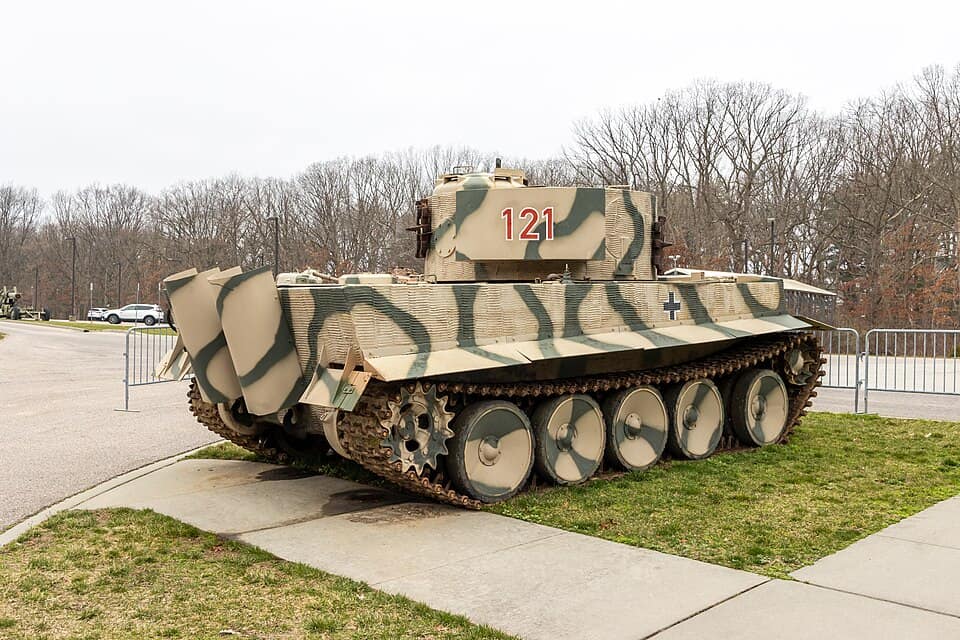
Classic classroom tank
Heavies like the Tiger I make angling obvious: park square and you are soft; present a diamond and the same plate suddenly asks much more of the shell.
Real-world reference photo — use the in-game armor viewer for exact plates.
When angling helps
WWII and early Cold War tanks with flat frontal plates often gain a lot from a diamond or mild side angle so the enemy hits the front corner instead of a flat turret face or weak machine-gun port.
Heavy tanks with strong cheeks but weak lower glacis often want to hide the LFP behind terrain and present only the strong upper works at an angle.
If your turret ring, cupola, or breach is the real weak spot, angling the hull does nothing unless you also deny that aim point with hull-down positions or gun depression.
When not to angle
Many modern MBTs are already highly sloped. Over-angling can flash your side composite or ammo racks to a flanking shot. In those cases, hull-down, side-scraping carefully, or simply not showing the tank is better than theatrical angling.
Against HEAT-FS and many chemical rounds, raw LOS thickness still matters, but ERA, composites, and spall liners matter more than a textbook angle. Check the protection analysis for the specific shell.
Overmatch and volumetric shells can defeat “perfect” angles if the caliber and hit location punch through edges, mantlets, or thin overlapping plates. If the armor viewer shows a green weak spot, believe it.
Practical habits that win fights
Pre-angle before you peek. Turning after you are already spotted often eats a shot in the side.
Use reverse angling / side-scraping only when you understand your track and side armor. Done wrong, you gift a mobility kill and a side pen.
After you fire, angle or reverse into cover. Reloading while flat to the enemy is how trades are lost.
Confirm shaky shots in the protection analysis with the ammo you actually face at that BR — not a random stock shell from a different decade.